More Than a Meal: A Cultural Experience
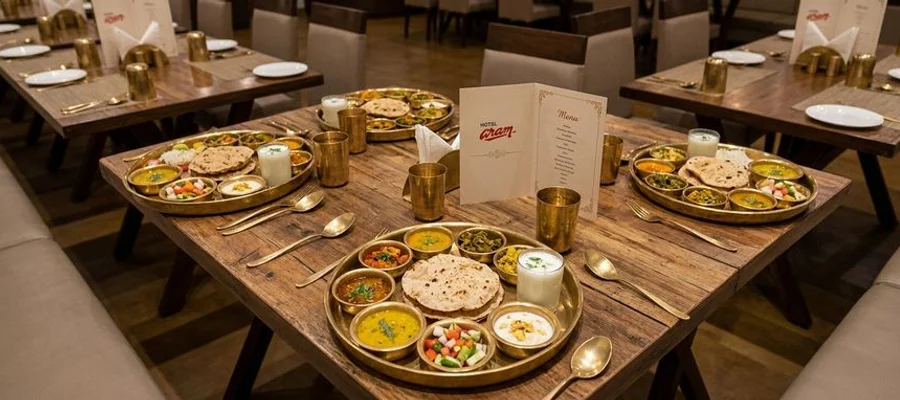
You might think of a thali as simply a large platter of different dishes.
In reality, it is a sophisticated dining system designed for nutritional completeness and sensory satisfaction.
The term “thali” refers to the metal plate itself, but the experience is defined by the precise choreography of service.
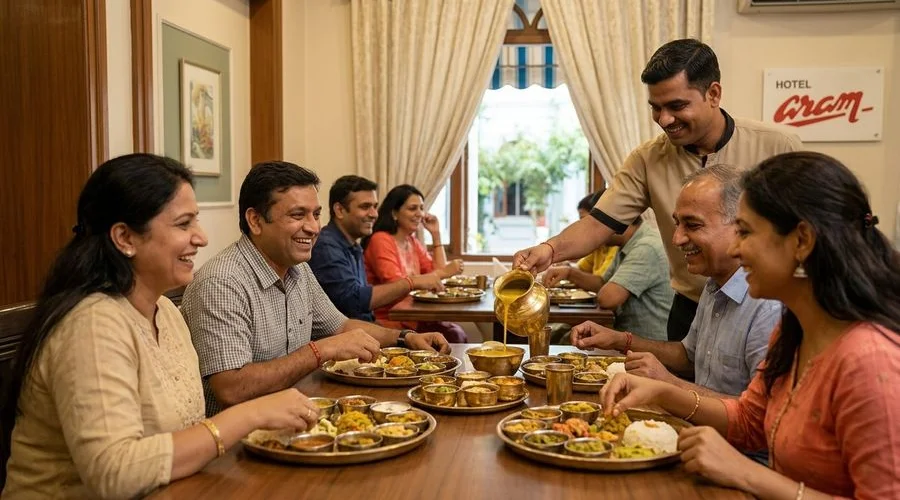
We have spent decades perfecting this art form at Aram Restaurant at Hotel Aram, serving guests in a building that dates back to the royal era of Jamnagar.
This is not just about eating.
It is about engaging the six fundamental rasas or tastes found in Indian culinary philosophy: sweet, sour, salty, bitter, pungent, and astringent.
Food historians note that this balance ensures a feeling of satiety that goes beyond just filling the stomach.
Our team sees this daily as guests finish their meals feeling energized rather than sluggish.
Anatomy of a Gujarati Thali
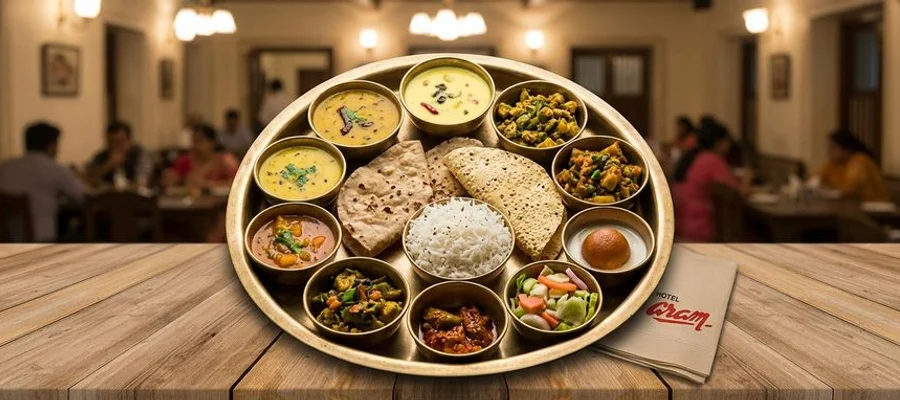
A proper Gujarati thali is an exercise in texture and temperature contrast.
It is never a random assortment.
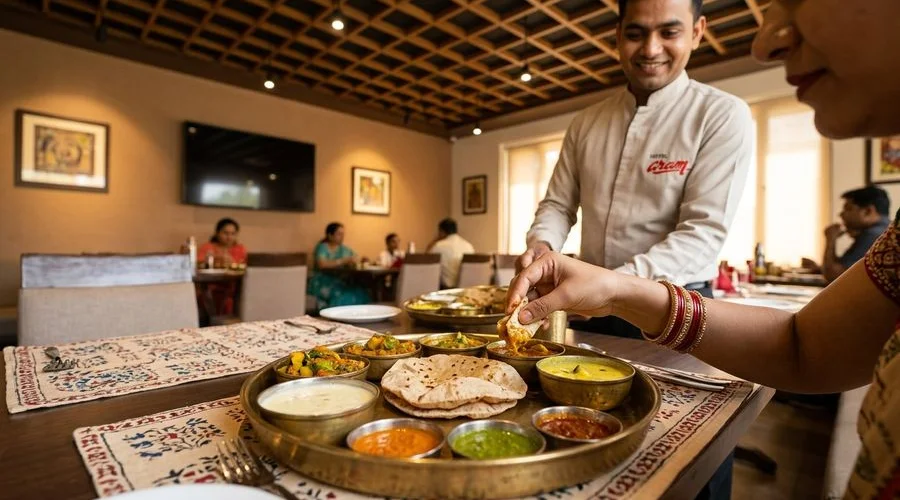
The items arrive in a specific sequence, traditionally starting with the breads and ending with rice, though the “unlimited” service means your plate is never empty.
The Foundation: Breads and Rice
Rotis (Phulkas): These are the centerpiece of the meal. In our region, they are often brushed with Ghee immediately off the tava (griddle) to keep them soft.
Wheat is the standard, but in winter, we often serve Bajra no Rotla (thick millet flatbreads), which are denser and provide essential warmth during colder months.
Rice: This is typically the final course. You will usually find steamed Basmati rice served alongside Khichdi, a comforting mix of rice and lentils that is arguably the most common comfort food in Gujarat.
The Vegetable Rotation
Shaak (Subzis): A standard thali features three to five vegetable dishes.
These change daily based on market availability, ensuring that ingredients like Bhinda (okra) or Dudhi (bottle gourd) are eaten only at their peak freshness.
Kathol: This refers to the pulse or bean preparation, such as Chana (chickpeas) or Moong, providing a dense source of plant-based protein.
The Liquid Balance
Dal: The Gujarati version is distinctively sweet and sour. It uses Kokum or lemon for tartness and high-quality jaggery for sweetness, creating a complex flavor profile that surprises first-time visitors.
Kadhi: This yogurt and gram flour soup is thinner than its Punjabi counterpart. We spice ours with green chillies, ginger, and curry leaves to aid digestion.
Textures and Sides
Farsan: These are savory snacks served as appetizers or sides. Common items include Dhokla, Pathra, or Kachori.
Accompaniments:
- Pickles (Athanu): Ranging from sweet mango (Chhundo) to spicy carrot.
- Chutneys: Fresh coriander and mint blends.
- Papad: Roasted or fried lentil crackers for crunch.
- Salad (Sambharo): A lightly sautéed salad, often made of papaya or cabbage with mustard seeds.
Regional Variations: Gujarat vs. Saurashtra
Many visitors assume all Gujarati food is sweet.
This is a common misconception that overlooks the distinct culinary zones within the state.
We are located in the heart of Saurashtra, where the flavor profile shifts significantly from the cuisine of Ahmedabad or Surat.
Comparing the Flavors
The table below outlines the key differences you will taste in our local cuisine compared to standard Gujarati fare.
| Feature | Standard Gujarati Thali | Saurashtra (Kathiawadi) Thali |
|---|---|---|
| Spice Level | Mild to Sweet | Spicy and Fiery |
| Garlic Usage | Minimal or None | Heavy (often uses Green Garlic) |
| Dominant Bread | Phulka (Wheat Roti) | Rotla (Millet/Bajra) |
| Signature Dish | Undhiyu | Sev Tameta (Spicy Tomato Curry) |
| Dairy Use | Moderate | High (Lots of Ghee and Buttermilk) |
The Local Influence
Saurashtra cuisine, often called Kathiawadi, was born from a dry, harsh climate.
This geography necessitated hearty ingredients like millet, plenty of garlic, and chilli to keep the body warm and active.
Our kitchen integrates these robust local traditions.
You will notice dishes like Ringan no Oro (roasted eggplant mash) appearing frequently on our menu, prepared with the smoky flavor characteristic of the region.
Dining Etiquette and Tips
Eating a thali comes with its own set of unwritten rules that enhance the experience.
Here are a few insider tips to help you dine like a local.
The “Katori” System
Your thali will arrive with several small bowls, called katoris.
These are for the liquids (dal, kadhi) and the sweeter vegetable dishes.
Dry vegetables and breads are typically placed directly on the metal tray.
How to Eat
Use Your Hands: Traditional etiquette dictates eating with the right hand. Mixing the dal and rice with your fingers changes the texture and temperature of the bite, improving the flavor.
Papad Placement: Do not eat the papad as a starter. Crush it over your rice and dal for added texture, or use it as a scoop for the khichdi.
Pacing: Since the servings are unlimited, start with small portions. It is considered polite to finish everything on your plate to respect the effort of the farmers and chefs.
The Sweet Finish
Dessert is not an afterthought here.
It is often served alongside the meal rather than just at the end, allowing you to alternate between spicy and sweet bites.
Common sweets include:
- Shrikhand: Strained yogurt flavored with saffron and cardamom.
- Basundi: Sweetened, thickened milk with nuts.
- Jalebi: Deep-fried spirals soaked in sugar syrup.
- Seasonal Fruit: Often mango in the summer months.
Where to Experience the Best Thali in Jamnagar
Finding an authentic thali is about finding a kitchen that respects the daily rhythm of fresh preparation.
We offer two distinct environments for this experience.
The 360 Rooftop Restaurant provides a modern setting where you can enjoy the Gujarati thali in the evening.
Dining under the open sky adds a unique atmosphere to the traditional meal.
For a more classic experience, Aram Restaurant serves the thali during both lunch and dinner in our heritage indoor hall.
Both venues rely on the same culinary principles that have defined our brand for decades.
Reserve your table today to see why this dining style has remained a favorite in Jamnagar for over 45 years.
Hotel Aram Editorial
Hotel Aram Editorial Team
The Hotel Aram editorial team shares insights on heritage hospitality, Jamnagar tourism, and culinary experiences from Gujarat's premier heritage hotel.