Khijadiya Bird Sanctuary: A Birdwatcher's Guide Near Jamnagar
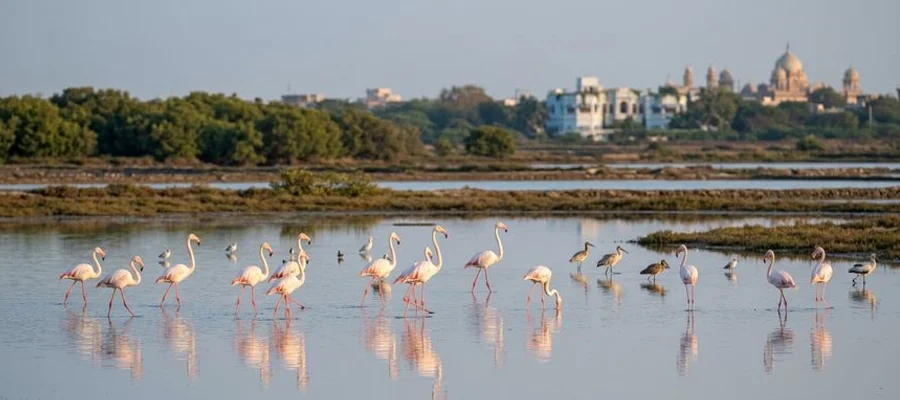
Gujarat’s Premier Birding Destination
Khijadiya Bird Sanctuary, situated just 12 kilometres northeast of Jamnagar, stands as a testament to the incredible biodiversity of the Saurashtra region. We have proudly directed guests to this natural marvel since our hotel first opened its doors in 1976.
The sanctuary was officially declared a Ramsar site in 2022, a prestigious designation that highlights its international importance as a wetland. This recognition places it alongside other global ecological hotspots.
Our team often explains to visitors that this is not just a park but a critical flyway stopover. Approximately 605 hectares of marshland provide a sanctuary for over 300 avian species.
Migratory birds travel immense distances from as far as Siberia, Afghanistan, and Europe to winter here. The sheer density of wildlife makes it a world-class location for both amateur nature lovers and serious ornithologists.
What Makes Khijadiya Special
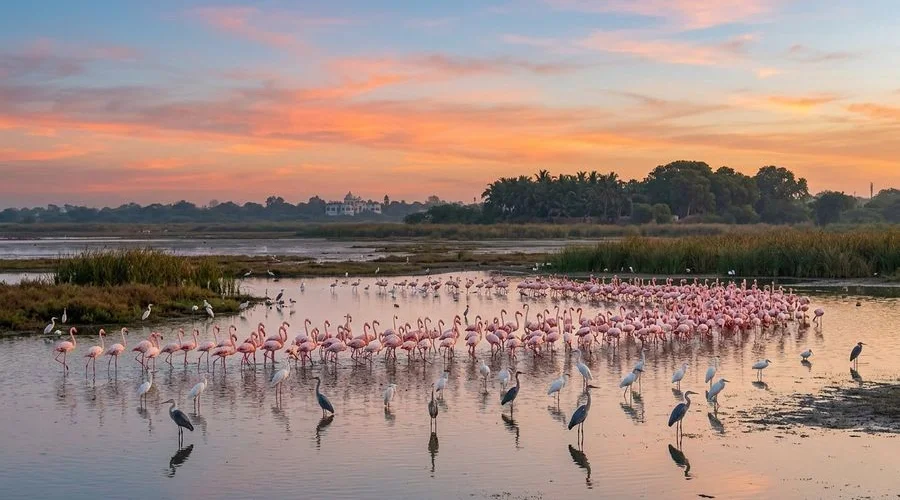
Khijadiya offers a unique geographical feature that you will rarely find elsewhere in India. We believe this specific trait is what separates it from other birding sites in Gujarat.
The sanctuary is defined by a distinct separation of freshwater and saltwater ecosystems. A reclamation bund, originally built to protect farmland from salinity, acts as the dividing line.
On one side, fresh water from the Ruparel River and Kalindri River creates a sweet-water marsh. The other side is fed by the tidal waters of the Gulf of Kutch, supporting entirely different marine life.
This dual ecosystem allows you to spot freshwater species and saltwater waders within a few hundred metres of each other. You effectively get two sanctuaries for the price of one.
Habitat Comparison
| Feature | Freshwater Ecosystem (North) | Saltwater Ecosystem (South) |
|---|---|---|
| Water Source | Ruparel Dam & Rainwater | Gulf of Kutch (Tidal) |
| Primary Vegetation | Desi Babool, Prosopis, Aquatic weeds | Mangroves, Salt-tolerant shrubs |
| Key Species | Purple Moorhen, Coots, Ducks | Flamingos, Gulls, Terns, Crab-plovers |
| Best Viewing | Watchtower 1 & Main Bund | Coastal trails & Mudflats |
Best Time to Visit
Timing is everything when planning a trip to Khijadiya. We always advise our guests to align their visit with the specific bird behaviour they wish to witness.
Seasonal Breakdown
- Peak Winter (November-February): This is the definitive window for migratory sightings. The weather is pleasant, and the water levels are ideal for large flocks of Demoiselle Cranes.
- Shoulder Season (March-May): As water bodies shrink, birds congregate in higher densities around the remaining pools. Photography is excellent during this time, provided you can handle the midday heat.
- Monsoon (July-September): This season transforms the landscape into a lush green haven. While access to some trails may be restricted due to mud, it is the prime time to see resident birds nesting.
For the absolute best experience, you must be at the gate right at sunrise. Our front desk staff recommends arriving by 6:30 AM to catch the birds when they are most active and the light is soft.
Notable Bird Species
The variety of species here can be overwhelming for first-time visitors. We have compiled a list of the standout sightings that our guests most frequently report.
Star Attractions by Category
| Category | Key Species to Spot | ”Insider” Observation Tip |
|---|---|---|
| The Icons | Greater & Lesser Flamingos | Look for them filtering algae in the shallow saltwater pans. |
| The Giants | Dalmatian Pelican & Great White Pelican | These massive birds often fish cooperatively in groups. |
| The Travelers | Demoiselle & Common Cranes | Listen for their distinct, trumpet-like calls during flight. |
| The Hunters | Indian Eagle-Owl & Black-necked Stork | Scan the dry scrub and acacia trees, not just the water. |
| The Residents | Black-winged Stilt & Pheasant-tailed Jacana | Spot the Jacana walking gracefully on floating vegetation. |
Practical Information
A successful trip requires a bit of logistical planning. We want to ensure you are not caught off guard by the lack of facilities inside the reserve.
Getting There and Entry
The sanctuary is a short 20-25 minute drive from the city centre. Our concierge can easily arrange a reliable auto-rickshaw or private taxi to drop you off and wait, as return transport is hard to find at the sanctuary itself.
Current Entry Details (Estimates for 2026):
- Entry Fee: Approximately ₹50-₹100 for Indian nationals; roughly $10 USD for international visitors.
- Vehicle Permit: You can drive your car inside for an additional fee (approx. ₹400-₹500), which serves as a mobile hide.
- Camera Fee: Expect a charge of roughly ₹200 for DSLR cameras with lenses over 70mm.
- Timings: 6:00 AM to 6:00 PM (Subject to seasonal sunset).
Essential Packing List
There are no canteens or shops past the main gate. You must carry everything you need for the duration of your visit.
- Hydration & Nutrition: Carry at least 2 litres of water per person and energy-dense snacks.
- Visual Aids: Binoculars are non-negotiable (8x42 is the standard recommendation).
- Sun Protection: The landscape is open with little shade, so a wide-brimmed hat is vital.
- Dust Protection: Cover your camera gear, as the trails can get quite dusty in the dry season.
Photography Tips
Capturing the perfect shot at Khijadiya requires patience and strategy. We have hosted many professional wildlife photographers who shared their top techniques with us.
- Use Your Vehicle as a Hide: Birds are often less afraid of cars than humans on foot. Shooting from your car window using a bean bag for stability often yields the closest shots.
- Get to Eye Level: If you are walking, crouch low. Photos taken from the bird’s eye level create a much more intimate and engaging connection than shooting from a standing position.
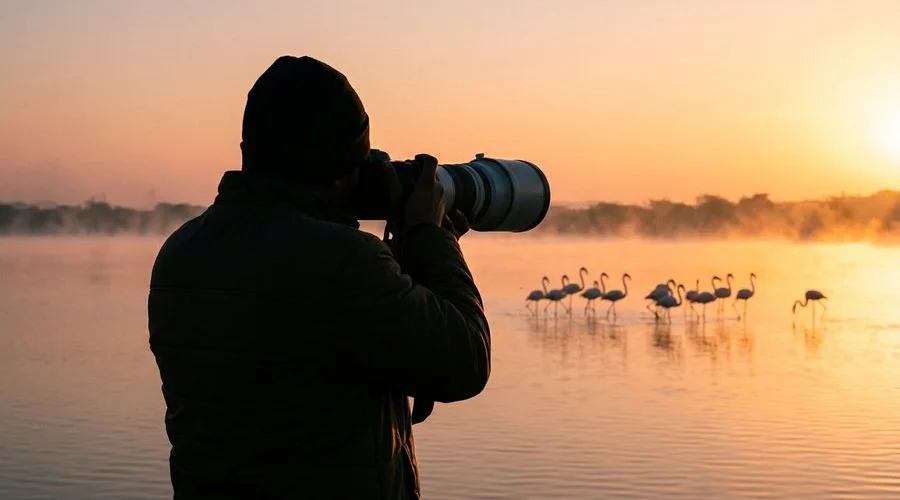
- Watch the Sun: Position yourself so the sun is behind you. This illuminates the bird’s plumage and avoids the silhouetting effect that ruins identification.
Where to Stay
The key to a successful dawn patrol is a good night’s sleep and a hassle-free morning. We invite you to make Hotel Aram your base of operations.
Located centrally on Pandit Nehru Marg, our heritage property puts you in the perfect position for an early departure. Our team understands the needs of birdwatchers and can arrange a packed breakfast for you to take along, ensuring you don’t miss a minute of the golden hour.
You can return to the hotel after your morning excursion to relax. Enjoy a traditional Gujarati thali or international cuisine at Aram Restaurant before heading out again to see Jamnagar’s heritage landmarks.
Book your birdwatching base at Hotel Aram today. Let us help you experience the wild beauty of Saurashtra with comfort and ease.
Hotel Aram Editorial
Hotel Aram Editorial Team
The Hotel Aram editorial team shares insights on heritage hospitality, Jamnagar tourism, and culinary experiences from Gujarat's premier heritage hotel.